
Home Is Where the Heritage Is: What Heritage Day Teaches Us About Property in South Africa
Every 24 September, South Africans put down their tools, light the braai, and celebrate eleven official languages, dozens of cultural traditions, and one shared address — South Africa. But heritage isn't only about food, music and dress. It shows up in something far more permanent: the homes we build, the neighbourhoods we choose, and the way we think about property itself.
Why heritage matters in property
At Mortgage Gateway, we help people from every corner of this country find a place to call home.
This Heritage Day, we're looking at how different cultures in South Africa think about property — where communities are concentrated, what they tend to look for in a home, and how understanding these differences can help us build a better, more integrated housing future together.
South Africa's 11 languages — and where they're spoken
Where our official languages are spoken most heavily still shapes property demand across the country today.
IsiZulu
The country's largest home language, concentrated mainly in KwaZulu-Natal, with growing communities in Gauteng.
IsiXhosa
Centred in the Eastern Cape, with strong representation in the Western Cape's townships and suburbs.
Afrikaans
Widespread across the Western Cape, Northern Cape and Free State farming towns.
English
The "universal" language, with dense residential clusters in Gauteng's northern suburbs, Durban and Cape Town's southern suburbs.
Sepedi, Setswana, Sesotho
Spoken across Limpopo, North West and the Free State.
Xitsonga, SiSwati, Tshivenda, IsiNdebele
Limpopo alone is home to five of the 11 official languages: Tsonga, Sotho, Venda, Afrikaans and English.
That linguistic map is really a map of property demand — and it explains a lot about how South Africa's towns and suburbs grew the way they did.
What different cultures value in a home
No culture is a monolith, and every family's preferences are their own. But how communities have historically built their homes still shapes buying decisions today.
Extended-family and multigenerational living
In many Zulu, Xhosa, Sotho and Tsonga communities, the traditional homestead was never designed for one nuclear family. The umuzi (Zulu homestead) or rondavel cluster housed grandparents, parents and children together, often around a central cattle kraal as the spiritual heart of the home. Today that shows up as demand for larger stands, granny flats and multi-unit properties.
Land as identity, not just asset
For many rural and peri-urban communities, land carries ancestral and spiritual weight. This drives a strong preference for freehold ownership over sectional title, and is part of why land restitution and communal tenure remain significant policy conversations.
Colour, craft and visible identity
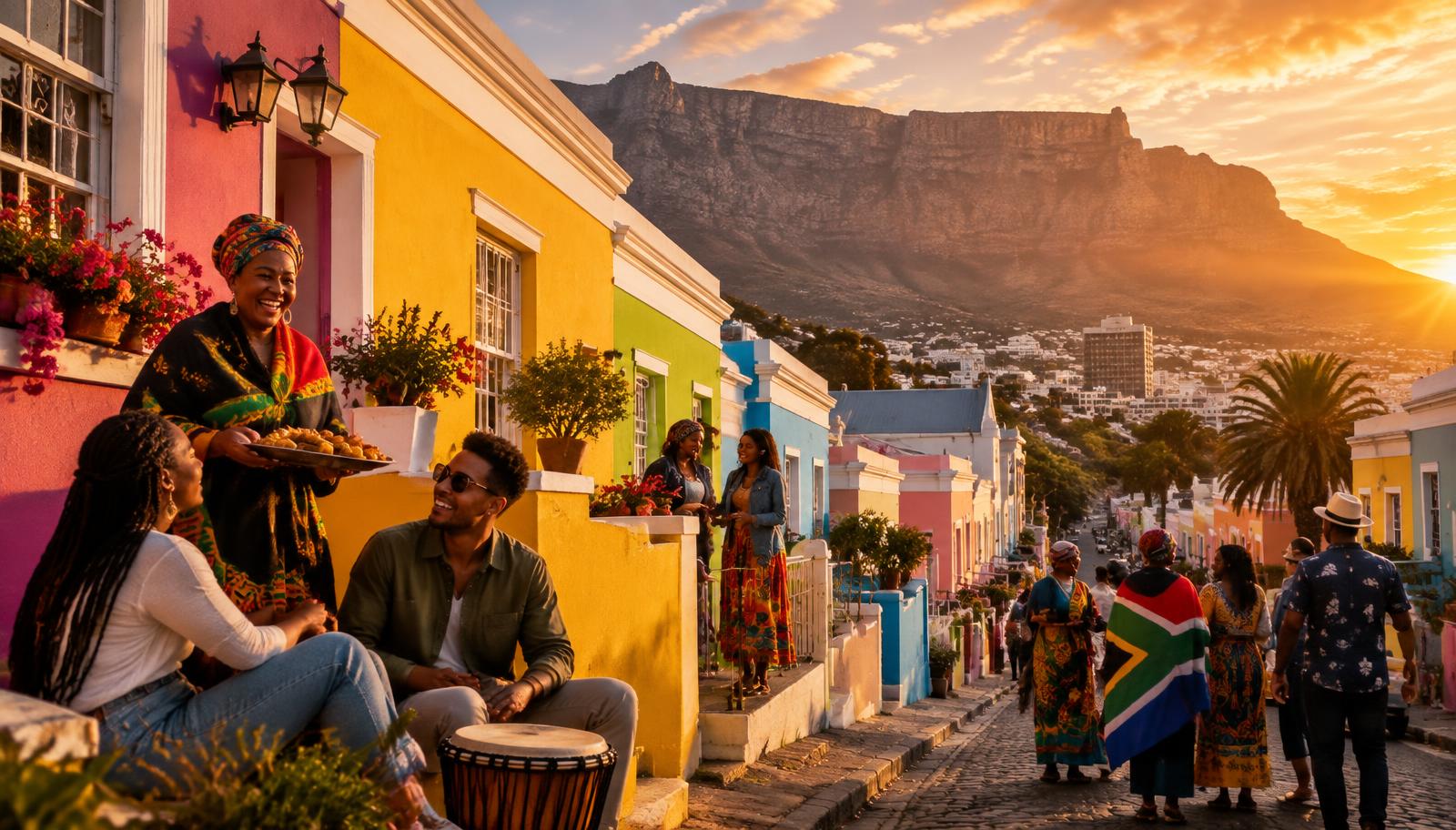
In Bo-Kaap, the Cape Malay community's brightly painted houses turned a neighbourhood into a celebration of freedom and identity after emancipation — property itself, literally the paint on the walls, as an expression of heritage.
The farmstead tradition
Afrikaner heritage carries a strong connection to farming — wide stoeps, thick walls and homesteads built for self-sufficiency. It still shows in demand for smallholdings and plots in farming towns across the Free State, Northern Cape and Karoo.
Close to community and places of worship
South Africa's Indian community, concentrated around Durban since 1860, has long valued homes within walking distance of temples, mosques and extended family — why suburbs like Chatsworth and Phoenix grew as tight-knit, multigenerational neighbourhoods.
Coastal and lifestyle living
English-heritage communities in Durban, Cape Town's southern suburbs and the Eastern Cape have tended to prioritise garden suburbs, coastal proximity and colonial-era architecture — still visible along the KwaZulu-Natal and Western Cape coastlines.
Building a better future, together
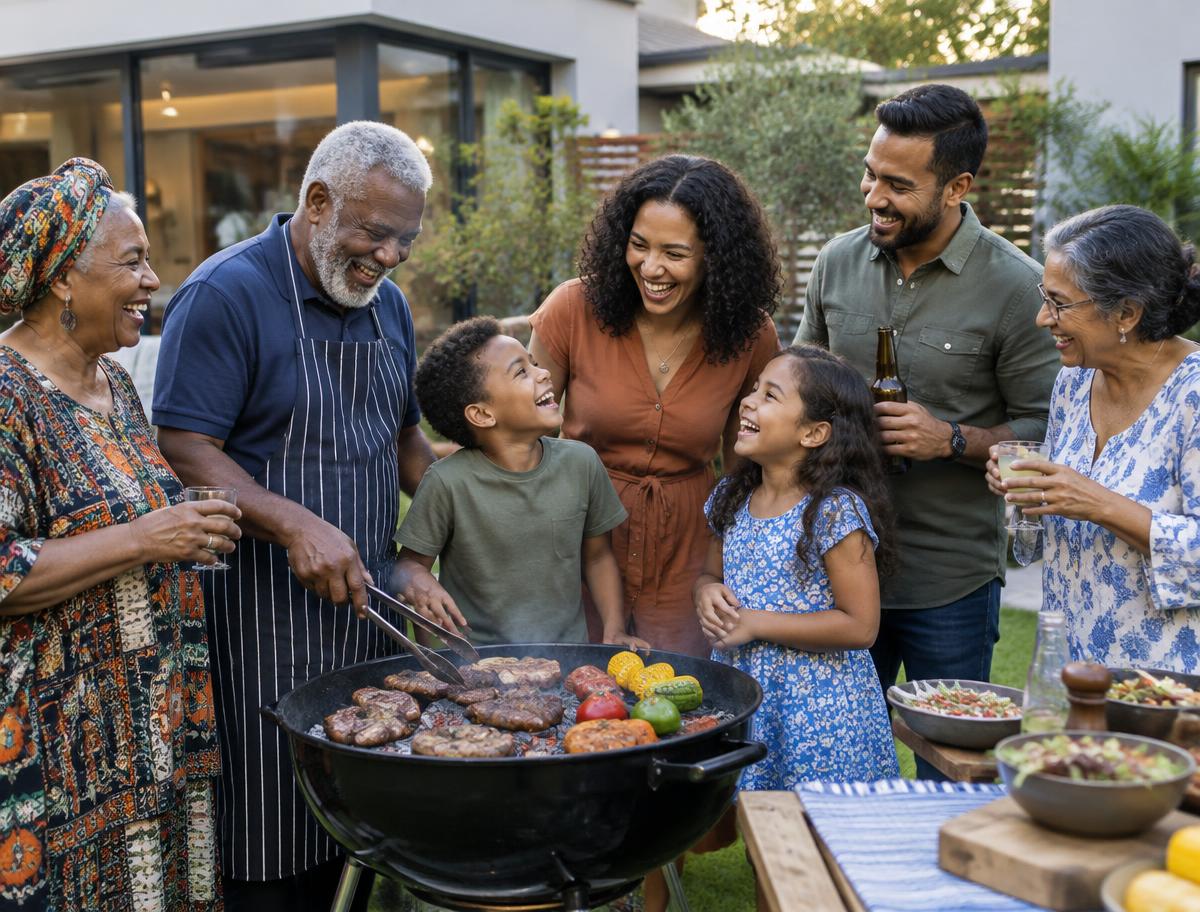
Heritage Day exists because South Africa chose integration over division — the idea that we can all gather round one fire despite our differences.
- Mixed-income, mixed-heritage developments — projects like Cape Town's District Six redevelopment and inclusionary housing policies in Johannesburg aim to rebuild integrated neighbourhoods on land where forced removals once tore communities apart.
- Communal and cooperative housing models — stokvels, rooted in Black South African communities, are increasingly used as cooperative finance for property deposits, blending traditional communal economics with modern homeownership.
- Heritage-sensitive urban planning — municipalities are protecting places like Bo-Kaap and historic townships as living heritage areas, recognising that cultural fabric is worth preserving alongside market value.
- Finance designed for multigenerational buying — joint bonds for extended families, and recognising stokvel contributions in affordability assessments, adapt home loans to how South African families actually organise their finances.
The takeaway
South Africa's property market isn't one market — it's eleven languages and countless traditions layered onto the same shared landscape. A buyer looking for a freehold plot with room for extended family has very different needs from a young professional wanting a sectional-title apartment near the city — and the more the property and finance industry understands those cultural drivers, the better it can serve every South African fairly.
This Heritage Day, whatever your braai, boerewors, bunny chow or biryani looks like tonight — we're proud to help build the diverse, integrated South Africa that Heritage Day was created to celebrate, one home loan at a time.
Get Your Free Home Loan Pre-Approval
One online application, compared across leading South African banks, with an experienced mortgage specialist guiding you from pre-approval to registration.
Start my free pre-approvalFrequently asked questions
How does culture influence property demand in South Africa?
Where South Africa's 11 official languages are most widely spoken still shapes demand. Traditions like multigenerational living, freehold land ownership and closeness to places of worship influence stand sizes, property types and suburbs buyers choose.
Can extended families buy a home together?
Yes. Many lenders offer joint bonds for more than one applicant, so family members can combine incomes. Each applicant is assessed for affordability and credit, and a Gateway specialist can compare bank offers for the family.
Can stokvel savings be used for a home loan deposit?
Stokvel savings are increasingly used towards property deposits. Banks will want to see the funds clearly documented, so speak to a Gateway specialist about how to present them in your application.
What kind of property suits multigenerational living?
Larger freehold stands, homes with a granny flat or cottage, and multi-unit properties are popular with families who want parents, children and grandparents living close together.