
Building or renovating? How staged payouts on your building loan work
Understand when and how your construction loan funds are released, why you only pay interest on what you've drawn, and how to keep your build on budget.
Home building finance in South Africa, step by step
Mortgage Gateway · Updated 24 October 2026 · 7 min read
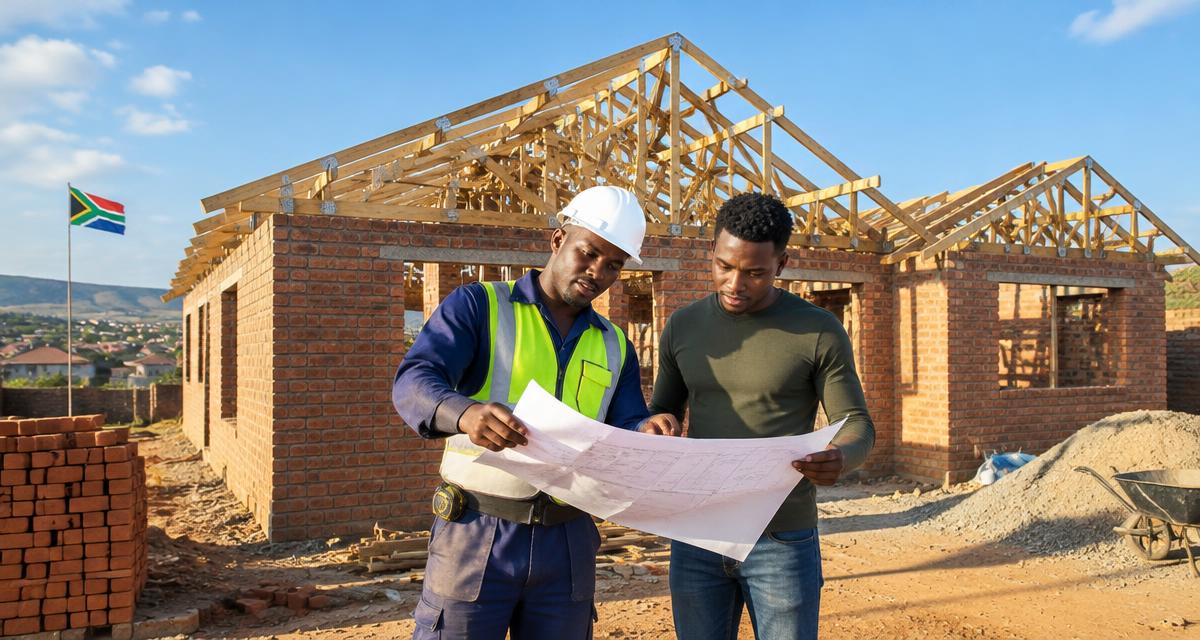
Pay as you build
Funds are released per completed stage, not all at once.
Inspected progress
The bank's inspector checks each phase before paying.
Interest on drawn funds
You only pay interest on what's been paid out so far.
Building a new home or renovating can raise questions about when and how your construction loan funds will be released. With staged payouts, your building loan payments are made step by step after each progress inspection, and interest is charged only on the funds you've drawn so far. This approach helps you manage your cash flow confidently while keeping your home building finance on track in South Africa.
How staged payouts work: a simple overview
Staged payouts are a structured way to finance construction, releasing funds in phases as work progresses. Instead of the bank paying the full loan on day one, money is paid out against work that has actually been completed. Interest applies only to the drawn amounts, not the entire loan, which helps you manage your budget effectively.
This protects you as well as the bank: your builder is paid for real progress, and you're never paying for work that hasn't been done.
What is a progress inspection?
Progress inspections are crucial checkpoints in a construction loan. An independent valuer or inspector appointed by the bank visits the site to confirm each phase is complete before more funds are released. This gives peace of mind to both the bank and the borrower and keeps a clear financial path throughout the build.
Tip: Ask your builder to notify you a few days before a stage is finished, so you can book the inspection early and avoid waiting between stages.
Why you pay interest only on funds drawn
Interest is calculated only on the money you've accessed so far, not on the full loan facility. Early in the build, when only the foundation has been paid for, your interest cost is small. It grows as more stages are completed. This keeps your costs transparent and manageable and helps you plan with confidence.
Use our bond repayment calculator to estimate your full monthly repayment once the build is complete.
How to get a building loan in South Africa: 6 steps
- 1
Get pre-approved
Find out what you can afford before you finalise plans, so your design matches your budget.
- 2
Prepare plans and a building contract
Get municipal-approved plans, a fixed-price contract with a registered builder and a detailed cost breakdown.
- 3
Apply and get bond approval
Your specialist submits a complete, bank-ready building loan application to multiple banks.
- 4
Register the bond
The bond is registered at the Deeds Office by the bank's attorney before any funds are paid out.
- 5
Build in stages with inspections
After each stage, the bank's inspector checks progress and the next drawdown is paid to cover completed work.
- 6
Final inspection and completion
Once the occupation certificate and final inspection are done, the last payment is released and normal repayments begin.
Start with a free 2-minute pre-approval so your plans match what you can afford.
Example building timeline and cash flow tips
Each stage below typically triggers a drawdown once inspected.
1. Foundation
Site preparation, slab and foundations are completed and inspected before the first drawdown.
2. Walls and framing
Brickwork up to wall-plate height is checked, then the next payment is released.
3. Roofing
Trusses and roof covering are installed, making the structure weathertight.
4. Finishing
Plumbing, electrical, plaster, fittings and the final inspection complete the build.
Plan your cash flow by aligning contractor payments with these stages to avoid surprises. Your bank confirms the exact number of stages and percentages for your build.
For planning the money between milestones, read our building loan drawdown and cash-flow guide.
Building loan documents checklist
- Municipal-approved building plans
- Signed fixed-price building contract
- Detailed cost breakdown (bill of quantities)
- Builder's NHBRC registration and home enrolment (new builds)
- Proof of income: payslips or financial statements
- Three months' bank statements
- Proof of plot ownership or offer to purchase for the land
With Zero Capturing, you simply upload these documents once and your specialist prepares the application for multiple banks.
Renovating instead of building?
Renovations, extensions and additions can also be financed. Smaller projects are often funded through a further advance or re-advance on your existing bond, while larger renovations may use a building loan with staged payouts. If you've built up equity, refinancing your home loan may also free up funds at a better rate.
Still looking for land? Read about land and plot finance.
Common pitfalls (and how we prevent budget surprises)
Starting before approval
Work done before bond registration usually can't be paid from the loan — wait for registration first.
No contingency budget
Keep 10% or more aside for price increases, weather delays and changes along the way.
Unclear contractor payments
Agree in your contract that your builder is paid per inspected stage, matching the bank's drawdowns.
Changing plans mid-build
Changes may need new plan approval and a revised cost, which can delay the next payout.
Client story: from plans to payout, with confidence
Meet Sarah, a first-time home buyer who navigated her building loan with ease. With Gateway's guidance, she managed her drawdowns and inspections smoothly and kept her project on track. Her story shows how much easier a build becomes with the right plan in place.
Client name changed for privacy.
Building loan FAQs
How are building loan funds released in South Africa?
Building loan funds are released in stages. After each phase of construction, the bank's inspector checks the work, and the next payment is released to cover completed work.
Do I pay interest on the full building loan amount?
No. During construction, interest is charged only on the funds already drawn, not on the full approved loan amount.
What stages usually trigger a drawdown?
A typical build has drawdowns after the foundation, wall plate or framing, roofing and final finishing stages. Your bank confirms the exact schedule.
What documents do I need for a building loan?
Banks usually ask for municipal-approved building plans, a signed fixed-price building contract with a registered builder, a detailed cost breakdown, proof of income and, if you already own the plot, proof of ownership.
Can I get a building loan to renovate my existing home?
Yes. Renovations and additions can be financed with a building loan, a further advance or a re-advance on your existing bond, depending on the size of the project and the equity in your home.
Does my builder need to be registered?
For new homes, most South African banks require the builder to be registered with the NHBRC, and the home enrolled before construction starts.
How long does a building loan take to approve?
Timing depends on the bank and how complete your documents are. Having approved plans, a signed contract and a full cost breakdown ready speeds up approval.
Ready to plan your build?
Get pre-approved today and start your building or renovation journey with peace of mind. A Gateway Home Loan specialist will guide you from plans to final payout.
Get Your Free Home Loan Pre-Approval
One online application, compared across leading South African banks, with an experienced mortgage specialist guiding you from pre-approval to registration.
Start my free pre-approval